

STAR TREK: STARFLEET ACADEMY Review — “Rubincon”
For its season finale, Starfleet Academy passed with flying colors, meeting the ultimate year-end assignment head-on and finding a way to perfectly encapsulate everything we love about this show into one final hour of gripping, edge-of-your-seat, coming-of-age Star Trek.
In “Rubincon,” the action is spread into two distinct storylines: the adults in the room having very adult conversations about the nature of life and consequences, and the kids out in the workplace putting their very real school lessons to the test in what amounts to a series of on-the-job final exams in a number of life-and-death situations.
The adults in the room, of course, are Captain Nahla Ake (Holly Hunter), Venari Ral baddie Nus Braka (Paul Giamatti) and stuck-in-the-middle nomad Anisha Mir (Tatiana Maslany), squaring off in a hackneyed trial of the century being staged by Braka in which he has Ake standing accused for all Federation crimes and Anisha serving as judge and jury. The trial is taking place in the captured atrium of the Athena, which has been lit ablaze and completely desecrated by Braka, and it does a good job to stand in for so much of today’s pervasive “us or them” modern discourse.
But where this episode really comes to life is on board the Athena’s saucer section where Jett Reno (Tig Notaro) is leading a skeleton crew of cadets to try and methodically piece together a way to combat the Venari Ral threat to the Federation. And honestly, if someone had said that Jett Reno captaining a starship with the sublime efficiency and precision of any of Starfleet’s best captains across the past thousand years was going to be one of the highlights of not only this season, but for all of new Star Trek in the past 10 years, I don’t think I would have believed them. But here we are.
Time to get rolling on those new Captain Reno series petitions, because Tig in command was extremely special.
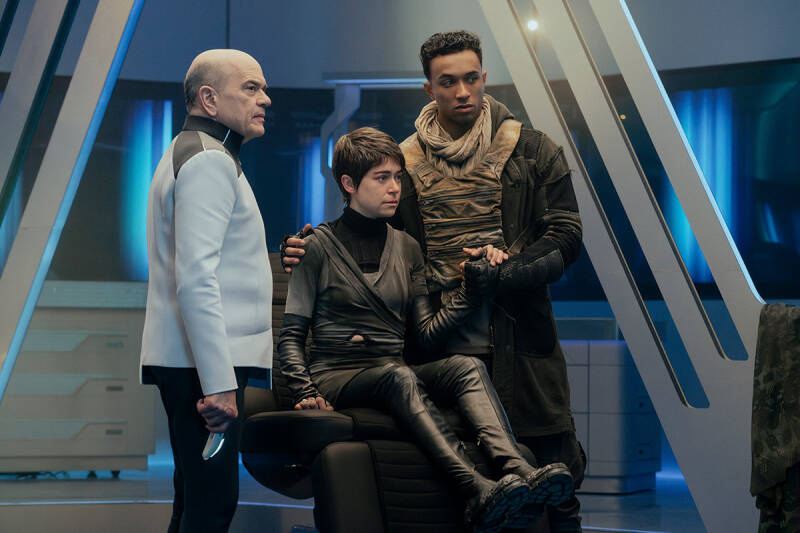
Robert Picardo as the Doctor, Tatiana Maslany as Anisha Mir, and Sandro Rosta as Caleb Mir. (Paramount+)
After helping the Doctor (Robert Picardo) and Ake pull off a tricky holographic decoy bluff escape, courtesy of a centuries’ old mobile holo-emitter that is actually from the 29th century (temporal mechanics are hard), Reno immediately gets to work testing her cadet crew on what it is going to take to save the Federation.
She starts with a pop quiz to get everyone focused on the task at hand: no, they aren’t going to go rushing off half-cocked trying to save their captain alone, they are instead going to try and settle in and figure out a way to disarm those pesky Omega-47 mines, so they can get some real help from Admiral Vance (Oded Fehr) and the Federation.
She then methodically gets each cadet zeroed in and focused on an assignment that will help them achieve their goal, testing them all along the way. Jay-Den Kraag (Karim Diané) is assigned to medical to assist the Doctor, who is a befuddled mess after being pulled out of the computer following their holographic deception.
Genesis Lythe (Bella Shepard) receives an early “minus for hesitating,” but marks none the less, for getting the ship focused first on fixing the sensors. Darem Reymi (George Hawkins) geta a “solid B” for his navigation calculations, but has points docked for his usual bad attitude when he realizes they are basically crawling along at one-eighth impulse because that’s all the power that can currently be spared.
Tarima Sadal (Zoë Steiner) is spending her time scanning subspace for a frequency that Braka is likely using to control his “wall of death,” and Caleb Mir (Sandro Rosta) initially can’t connect the dots on how all this will make a difference when Reno asks him to build a program that can intercept that frequency once they find it. But like any good teacher, when he asks how this is going to help them, she says: “You tell me?” and challenged, he is finally able to piece it all together.
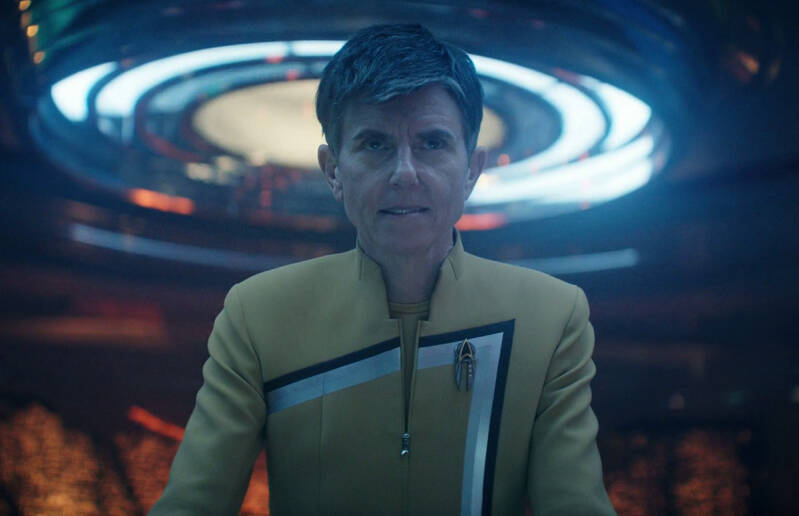
Tig Notaro as Jett Reno. (Paramount+)
The scene is a microcosm of what has made Starfleet Academy such an unqualified success in Year One. It’s fun, smart, dynamic and expertly weaves characters and story together in ways that always feel completely organic. A cynic would say, “really, how’d we get to this point? With a ship of cadets as the last line of defense to save the day.” And a visionary would say, “just watch the show. They’ll show you exactly how.”
Because this show has proven itself over-and-over again to be both a wholly new version of Star Trek, with its use of a fresh, youthful parlance rarely heard previously in the franchise (“Wait. I think I have to pee”), and storytelling choices traditionally rooted in the ethos of Trek with both nostalgia and world-building that make it feel like a direct descendant of ’90s era Trek.
And one of the best ways to define all that glowing praise tangibly in only two words is to just say: “Jett Reno.” Prior to this season of Starfleet Academy, it would absolutely be fair to say that Tig Notaro’s many appearances as Jett Reno — as inspiring and entertaining as they might have been — were still best described as a novelty. It was always pretty clear when she was showing up in Discovery, it was usually for some combination of comic-relief and/or inspirational storytelling nugget. (And that’s not the insult you think it is.)
Notaro famously has a very busy career, limited availability to shoot, lives 3,000 miles away from Toronto, and is really bad at technobabble. She’s also close friends with Alex Kurtzman (which is how she got cast to begin with) and her appearances always kind of felt like a situation in which they were making room for her in the script or the shooting schedule or whatever. (Again, not the insult you think it is.)
But now suddenly, in Season 1 of Starfleet Academy, somehow through her availability or better scheduling or a more coordinated production attack, she feels like an indispensable part of this cast. She has legitimately gone from “entertaining novelty” to “standout Trek icon character” this season, with one impactful scene after another. Oh, and she is no longer terrible at technobabble.
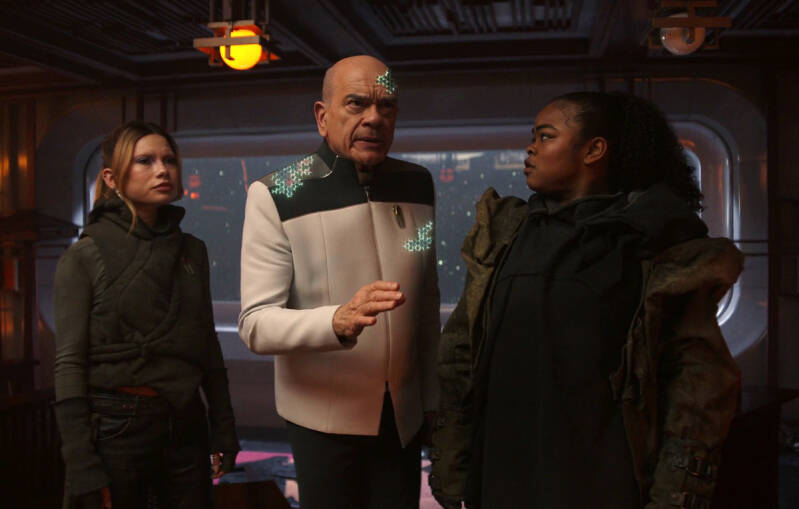
Bella Shepard as Genesis, Robert Picardo as the Doctor, and Kerrice Brooks as Sam. (Paramount+)
When her and Mir are off on their own working on the engineering relays to try and fix the warp core, she’s a natural, and the scene is another emotional homerun payoff, as she makes sure Caleb understands that very few people would have done what he did for his friends back on Ukeck in “300th Night” to save them. “Remember the first day of class when I asked you to tell me who you are? You just told me.” Powerful stuff, right there.
Elsewhere in the scenes on the Athena, we get a few additional great moments like Caleb and Tarima finally coming back together to help guide the ship to Braka’s location, and Reno making one final declaration as the ship springs into action (“As far as final exams go, this one is a doozy. If you pass, we live. If you fail, we’re all dead. Good talk.”), and Sam (Kerrice Brooks) working on her “final exam” trying to solve an algorithm to stabilize the Omega molecules.
The plan to neuter the Omega molecules came from the EMH when Jay-Den finally saw through the Doctor’s confused speech patterns to “find the glue on your shoe” with the “rubin parts,” or rubin particles that needed to be reduced inside the cohesive makeup of Omega. Fun stuff. (And all because Sam and Genesis had temporarily stopped speaking Tomza to each other.)
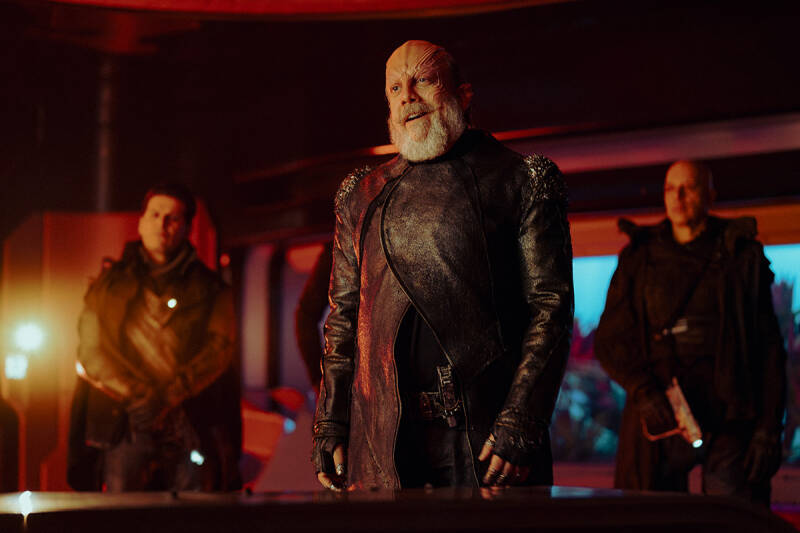
Paul Giamatti as Nus Braka. (Paramount+)
Back at Braka’s gaudy “trial of the century” where the “revolution will be televised,” the scenes are hefty and dramatic and carry with them the incredible cinematic weight of the EGOT-worthy performances of Hunter, Giamatti and Maslany. But instead of these actors chewing up the scenery as you might expect, the opposite is almost true, if you can believe it, and the scenery is actually chewing up the actors. Because honestly, the redress of the Athena’s atrium is almost a little too much for the senses to absorb.
With the fires and glowing words of discord emblazoned everywhere (not to mention the weird audience of aliens hovering above), it’s all a little bit much, and it’s a great choice for Hunter and Maslany to not compete with that environment by instead giving very measured, understated performances, punctuated, of course, by Braka’s usual bluster and Ake’s clever machinations.
She knows very early on that the Venari Ral leader has showed his cards prematurely when he tells the “sad story” about his father and his colony being persecuted by the Federation raining “red missile hell fire down on them” when he was a boy.
Ake plays her cards just right, though, saving them for one final lesson for Caleb, after failing to get through to Anisha by reminding her of the crimes she committed and the family she destroyed in the process (poor old Lt. Akamu Lee, the transport pilot her and Braka killed that began this whole saga).
After Anisha has declared Ake “guilty,” Caleb arrives just in time for one more dramatic “debate” on the floor of the atrium. This time for all the marbles. First, he tells his mom unequivocally that he not only believes in Nahla, but she believes in both him and her, saying, “She believes we can make a difference. She’s never given up on us.”
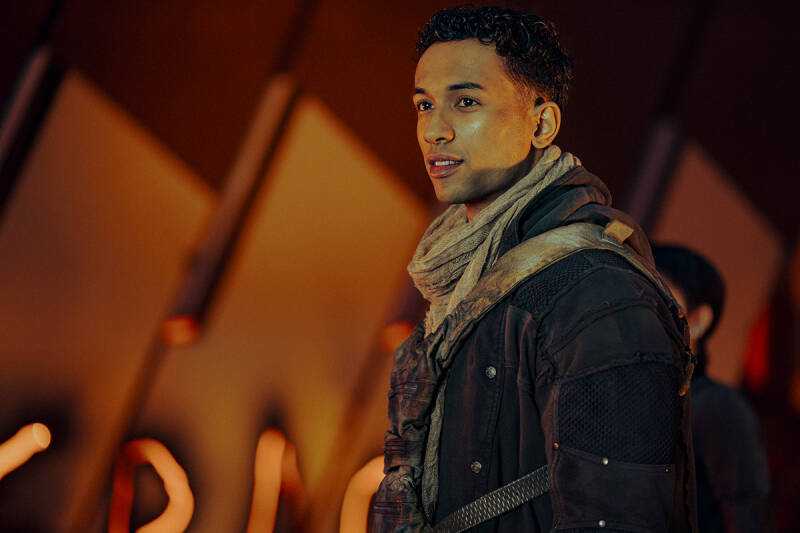
Sandro Rosta as Caleb Mir. (Paramount+)
As we finally hear Caleb declare Starfleet Academy as his home, it’s time for one more final exam, this one courtesy of the Chancellor, as Nahla asks Caleb about his studies in exochemistry and what he knows about strontium, the mineral mined on the colony where Braka grew up. Of course, he knows a lot! It’s another passing grade as both he and Nahla quickly point out that it was obviously the strontium that Braka’s father shot into the atmosphere that resulted in his colony’s destruction, and sadly Braka has had his entire world view shaped through the lens of a little kid that never grew up. (Sounds pretty familiar.)
In the end, Giamatti was a force in his three appearances as Nus Braka in Starfleet Academy, bringing untold bombast and swagger to the role, which were highlighted time-and-again in his one-on-one acting faceoffs with Hunter. Whether screaming “Guilty!” over and over again, or beaming into the Athena’s captain chair and calmly declaring, “Who you kidding? It was always going to be me in this chair,” Giamatti was phenomenal as Braka. And the Venari Ral are a potentially interesting on-going villain for the series.
However, looking back on Braka as a whole, each of his appearances had a slight note of familiarity in them and we never got to see him scheming away from the action. It was great to uncover so much of his backstory and motivations through his pontificating in “Come, Let’s Away” and “Rubincon,” but ultimately, we were left wanting a little more ‘action Braka’ in terms of his day-to-day with the Venari Ral.
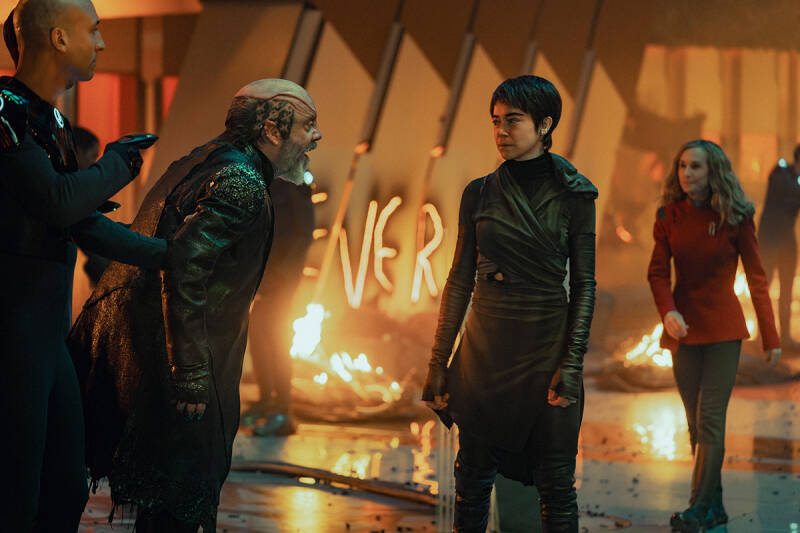
Paul Giamatti as Nus Braka, Tatiana Maslany as Anisha Mir, and Holly Hunter as Nahla Ake. (Paramount+)
One of the show’s major achievements across its first 10 episodes was how hopeful and joyous it was, even in the face of a unique reality: in almost every episode and throughline from episode 1 to 10, the Federation was almost always being shaped as a villain in some key protagonist’s eyes.
For Caleb Mir as a boy, for Anisha Mir as a scorned mom, for the Venari Ral. Even on a smaller scale for the rival War College or for Betazed, who were afraid to lower their walls, or the Kasq, afraid to face organics, or the Klingons, afraid to see their culture dismantled. From every angle, someone was always challenging Starfleet and the Federation, and the show and Nahla Ake never once failed in keeping things positive and upbeat in answering those charges and learning from them and moving forward and showcasing the best of the Federation (from its past, present and future).
The layered and connected scripts were on display throughout the series and again here in “Rubincon,” with a series of references back to previous episodes of varying degrees of importance.
From the consequences of hijacking that supply shuttle in “Kids These Days” to a visit with the humpback whales of the Bay Area in “Beta Test.” From the debates in the atrium of “Vox in Excelso” to Tarima’s floral safe space in “Come, Let’s Away.” From the “simulation debacle” in “The Life of the Stars” to a meet cute between Sam and Genesis speaking Tomza in “Kids These Days” to a fun, little airlock stowaway trick in “300th Night.”
The layers and set-ups and payoffs for this series are just too many to mention, but the producers deserve praise for telling such a cohesive story across 10 episodes.
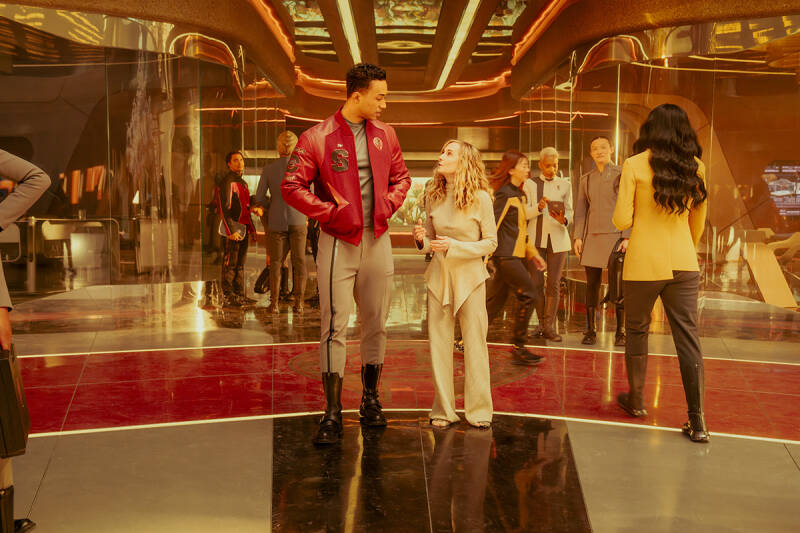
Sandro Rosta as Caleb Mir and Holly Hunter as Nahla Ake. (Paramount+)
OBSERVATION LOUNGE
- This episode is directed by longtime, new era director Olatunde Osunsanmi, who has now directed eighteen Trek outings since Discovery’s “The Butcher’s Knife Cares Not for the Lamb’s Cry.” This is Osunsanmi’s first time directing any Star Trek since his stint behind the camera helming, uh, checking notes, something called “Section 31.” (I don’t think I’ve heard of that.)
- There are four writing credits on this episode. Story credit goes to showrunner Noga Landau and series creator Gaia Violo, while “Written by” credit goes to Alex Kurtzman and Kirsten Beyer, who wrote “300th Night,” as well.
- Jett Reno’s “Now… show me pretty streaks of light.” is a great new entry into the ongoing warp speed command lexicon from the captain’s chair.
- President Rillak, who was routinely featured in Star Trek: Discovery, received a shoutout in the propaganda news crawl on the screen as part of the Venari Ral News Network. (She was apparently at odds with Admiral Vance on steps to combat the Venari Ral threat, but we don’t believe it.)
- Three planets were mentioned in the Venari Ral news crawl as considering to join Braka’s cartel of non-member worlds: Aldebaran, Halka and new Qo’noS.
- Ake mentions that there is no “Starfleet anthem” in the 32nd century, but there was a Federation anthem back in the 24th century, and we got to hear it in DS9’s “Take Me Out to the Holosuite.”
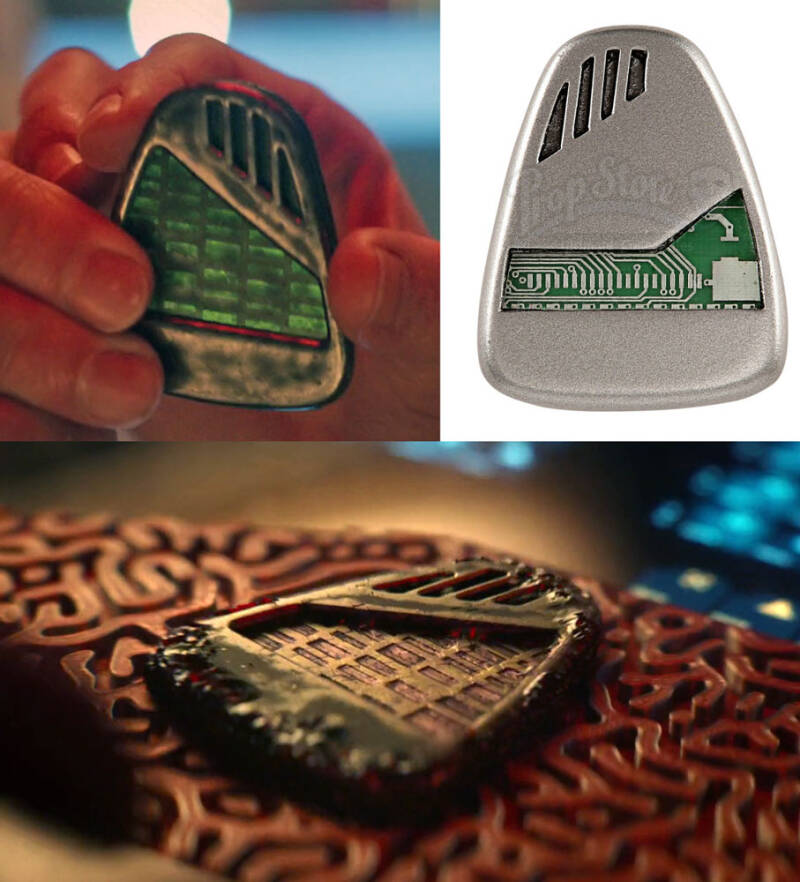
The Doctor’s mobile holo-emitter in ‘Academy,’ and an original ‘Voyager’ prop piece.
- The Doctor pulls his mobile holo-emitter from inside his uniform jacket — smart to finally move it out of sight after wearing it on his arm for all those years! — and it appears the now-ancient piece of futuristic tech has received a few upgrades since he first got it back in Voyager. The ‘new’ prop appears to have been built backwards in layout compared to the original, though the quick shot of it emerging from programmable matter looks to be flipped to match the Voyager-era prop.
- The holographic decoy trick in space is hardly a first for Trek, as we’ve seen the Doctor himself pull it off in the Voyager episode “Basics, Part 1.” In that instance, not only were holo-Talaxian ships deployed to help the USS Voyager in a battle with the Kazon, but the Doctor himself was cast into the middle of the action in space. In TNG’s “Peak Performance,” Worf used a similar trick during the Zakdorn war game simulation to remotely program sensor ghosts and make the Enterprise think they were seeing a Romulan ship.
- Ake’s code to the Doctor to perform the holographic deflector trick is from the Hermetic writings of Hermes Trismegistos (and is a perfect match for a holographic character): “Leap clear of all that is corporeal and make yourself greater.”

Paul Giamatti as Nus Braka. (Paramount+)
- Later Reno quotes Leonardo da Vinci (another famous Voyager hologram!) when she says: “Science is the captain, practice the soldiers.” (Which, of course, the cadets knew when she quizzed them.)
- For the sixth and final time this season, we hear Digital Dean of Students (Stephen Colbert) over the intercom letting Specialist Krebs know that his Talaxian Fur-fly is now “mating with itself” and asks, “Does that seem ok to you?”
- The Digital Dean also references honoring all local customs for everyone visiting Betazed, including those attending any local weddings (where the participants must attend in the nude).
- Caleb closes out the season with a “Cadet, Second Class, Log Entry,” his first at the school.
- The needle drop at the end of the episode is “Beautiful Child” by Rufus Wainright, who also sung “San Francisco (Be Sure to Wear Flowers in Your Hair)” from the pilot episode.
- Even though Discovery couldn’t save the day — a tidy explanation for why the spore drive wouldn’t have just ended Braka’s plan immediately — we do see Captain Burnham’s starship outside Athena’s atrium in the closing moments of the episode.
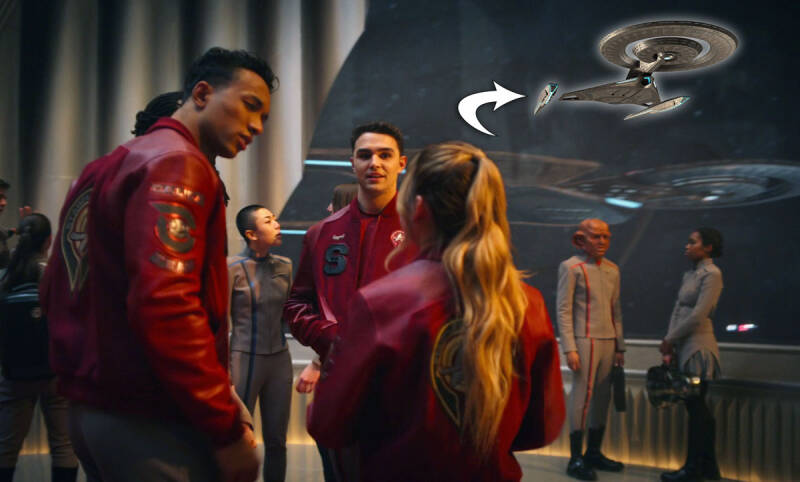
The USS Discovery makes a cameo at the close of the episode. (Paramount+)
HAVE A GREAT SUMMER
The closing credits entertainingly run with interesting factoids on each main character (and actor portraying them), along with authentic yearbook and childhood photos from the cast as “young zygotes.”
Here is one notable inclusion from every featured character:
- Nahla Ake, Hopes & Dreams: “To sleep under every star, and to bring back tube socks.”
- Caleb Mir, Wants to Be Remembered For: “Being the only sentient being to survive the Kraag Special Omelet.”
- Jay-Den Kraag, Wants to Be Remembered For: “His famously unsurvivable gormagander and chives omelet.”
- Sam: President, Founder and Empress of the CSFC – Captain Sisko Fan Club
- Darem Reymi, Most Likely To: “Commission a nude of himself.”
- Genesis Lythe, Most Likely To: “Rip an Achilles and never know.”
- Tarima Sadal: “Ocam, you’re thinking too loud.”
- Charles Vance, Nova Squadron Actual Nickname: “Vancypants.”
- Lura Thok: “The dance floor is my battlefield. The kitchen is my dance floor.”
- Athena’s Computer, If I Weren’t a Ship, I Would Be: “A tricorder, they have it so easy.”
- Digital Dean of Students, Most Likely To: “Have an existential crisis.”
- Jett Reno, Number One Pet Peeve: “Why do I come after the two voices?”
- The Doctor, Most Proud of: “Sam.”
- Anisha Mir, Most Proud of: “Do you really have to ask?”
- Nus Braka, Most Likely To: “Release an acoustic folk album, ‘Songs in the Key of Braka.’”
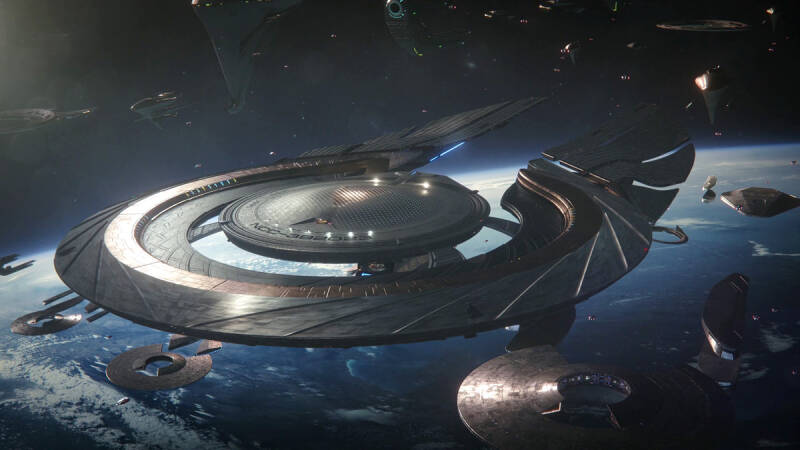
The USS Athena with its Starfleet brethren above Betazed. (Paramount+)
Throughout its entire first season, Starfleet Academy offered a consistent narrative tone from week-to-week, with character-driven stories that were fun, engaging and deeply Star Trek. The energy around the series was vibrant and alive, and it was a confidently crafted show with a focused vision and purpose.
It tapped into the tradition and 60-year history of Star Trek, while also expertly forging its own new territory in the 32nd century. And it did so while continuously building on the popularity and talent of the show’s talented young cast.
Starfleet Academy deserves all the top marks and its position at the head of the class, as we wait for our assignments — and the show’s return.
Star Trek: Starfleet Academy will return in 2027. Next up? Star Trek: Strange New Worlds Season 4, which will debut later this summer on Paramount+.
Add comment
Comments