


09-Personnel Protocols
1.Table of Contents:
-
9.1 Uniform Code of Appearance
-
9.9 Duty Watches
-
9.10 Duty Teams
- 9.11 Security Clearances
This manual section is to set out the rules and the characteristic of Starfleet, a role-playing game that is set in the Star Trek® universe which is based in SecondLife 3D virtual World
This document delineates the manner in which the United Federation of Planets - Starfleet operates; the resources that are utilized; a discussion regarding the rights, privileges, tasks, duties, and responsibilities of our members; our code of conduct; methods for dispute resolution; as well as etiquette and behavior. In an effort to enhance the smoothness of our role-playing on the Gallant, and to minimize waiting times for all participants to prepare, I kindly request that each crew member have the following items READY for any role-playing episode they attend on the Gallant:
NOTE: PLEASE READ NOTES BEFORE ROLEPLAY TIME.
THESE ARE SENT OUT IN GROUP NOTICES AND PERSONAL IM's IN SECONDLIFE OR EVEN ON OUR DISCORD CHANNEL: roleplay-story arc-notes
9.1 Uniform Code of Appearance
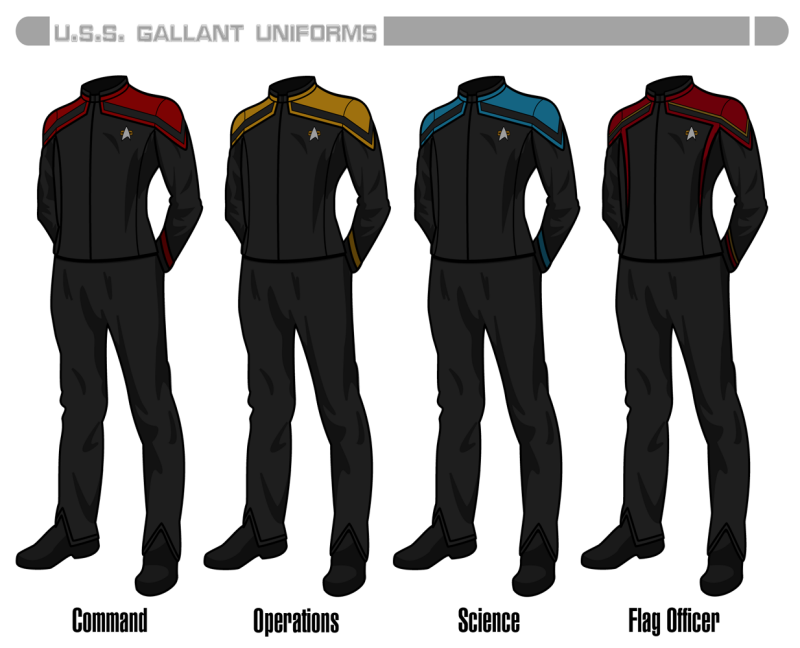
Figure 8.1.1 - USS Gallant uniforms circa 2400's
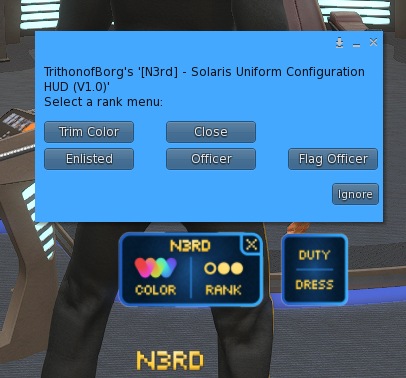
USS GALLANT UNIFORM HUD
- The uniform Hud lets you wear your division colors and assigned rank pips
- Lets you switch between
- 1) duty uniform
- 2) dress uniform
Same exact details as your DUTY uniform, except this is for DRESS
Formal occasions

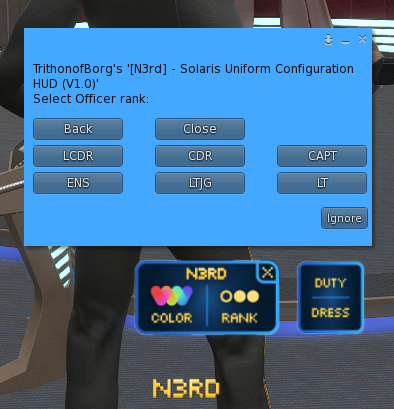
NOTE : CREWMAN IS OUR STARTING UNIFORM LEVEL THAT ONLY HAS THEE GREY FEATURE AND SIM COMBADGE DURING THE TRIAL PERIOD
Figure 9.1.1 Have the Gallant Combadge correctly on your uniform.

USS GALLANT Combadge
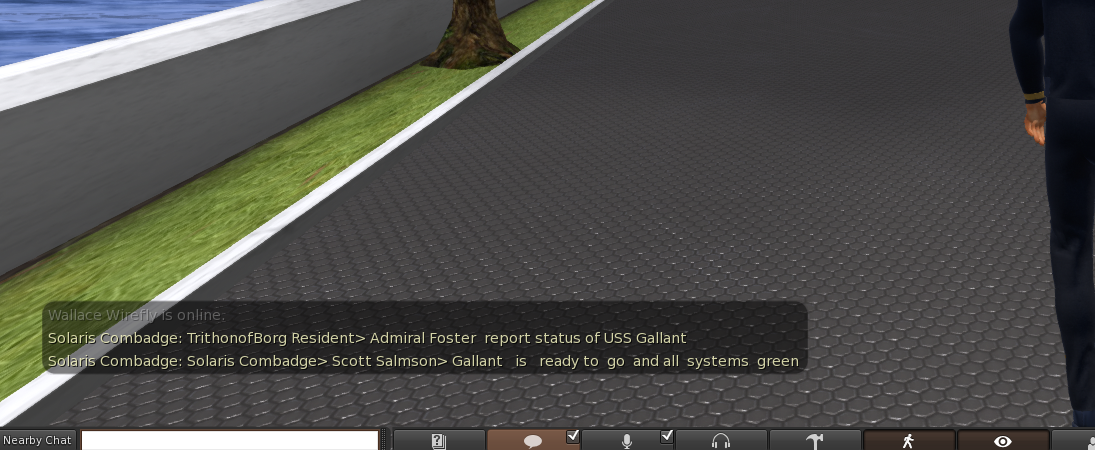
USS GALLANT COMBADGE WORKS ON 2 CHANNEL
CHANNEL 22 SIM WIDE
CREWMAN & GALLANT OFFICERS
YOU CAN READ OTHER MEMBERS CHAT ANYWHERE ON OUR SIM.
IN LOCAL CHAT TYPE :
/22 WHAT YOU WISH TO SAY....
CHANNEL 11 GRID WIDE
GALLANT OFFICERS
YOU CAN READ OTHER MEMBERS CHAT ANYWHERE ON OUR SIM OR ANYWHERE ON SL GRID
IN LOCAL CHAT TYPE :
/11 WHAT YOU WISH TO SAY....

MAKE SURE DURING ANY TYPE OF RP OR EXTRA EVENT TO WEAR YOUR UNITY STAR HUD SYSTEM ( earn all the award that comes with the system )


Figure 9.1.2 - USS Gallant Away Team and EVA requirement

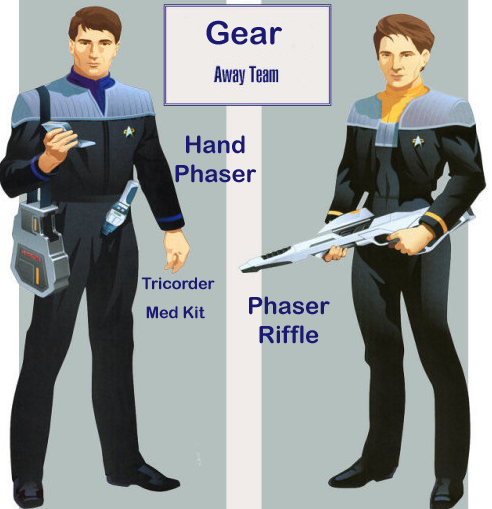
We allow other medical equipment but also hud Unity Hypospray
Have a Unity PHASER / PHASER RIFLE
OFFDUTY CLOTHES
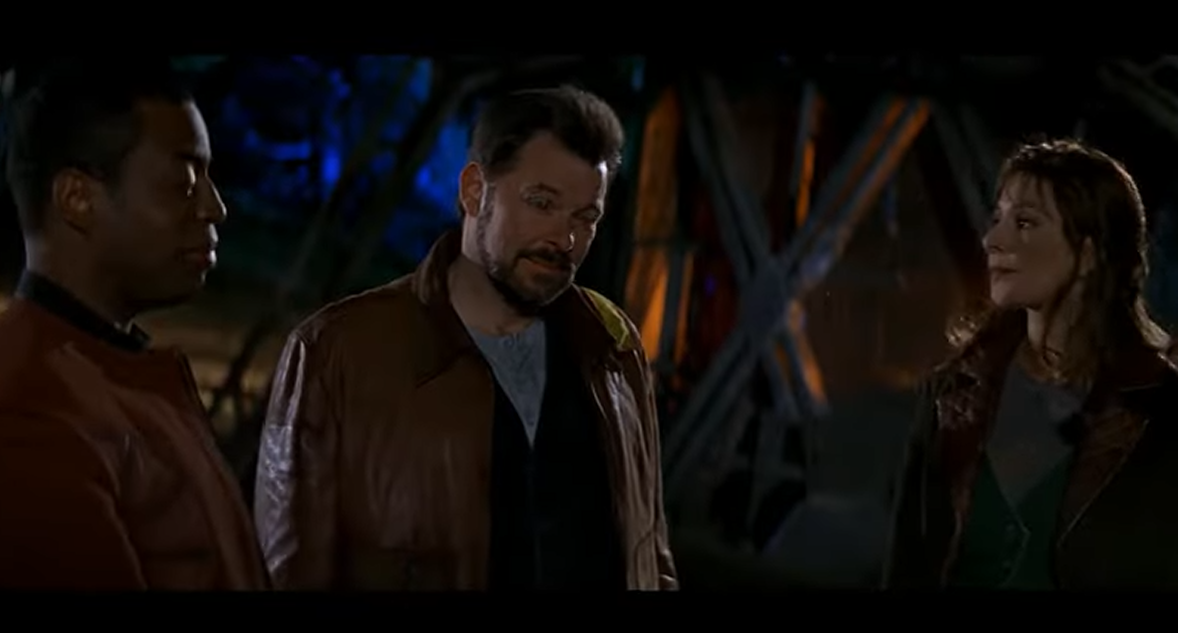

Figure 9.1.3 - Examples of away mission,Hangout & Offduty
Nothing that stands out, the point of wearing Plain Clothes on an away
mission is to blend in or when we may have an occasion as a crew to just hangout. Your Off Duty. WE ASK FOR YOU TO BE MODEST( Rated-G) IN YOUR APPEARANCE
- Have Combadge( desired but optional) on
- Hidden PHASER II & Other Equipment( desired but optional)
9.2 Departmental Duties List
All Avatar Role-players aboard Gallant are members of one of six (6) primary departments and are responsible for performing their respective duties therein. Gallant's department organization may differ from other role-play groups due to the Sovereign -class' distinctive size and mission profile. However, many positions will be familiar to those with knowledge of the fandom.
The list below contains the role-play elements for each department. This should help make each character's duties clear, limit in-character contradictions and prevent us from 'stealing' role-play opportunities from others. Gallant role player's do not occupy multiple positions for the same reason, allowing for a fair share of contributing to the story arc for all members
9.3 COMMAND DEPARTMENT DUTIES
-
Starship command. At least one senior Command officer must be on-duty at all times to supervise the starship's operation. The second officer assumes the duties of a senior Command officer when required.
-
Away team command. A senior member of the department must be present to oversee and direct the actions of any expeditionary elements.
-
Ship-wide administrative duties. The CO, XO, COB (the Triad) and yeoman are responsible for processing all daily admin and status reports from department heads, officers, NCOs, junior enlisted and civilians.
-
-
Duty watch management. Typically the first officer is responsible for ensuring the appropriate dispersion of the crew's complement across the three standard watches.
-
-
Starfleet Command liaising. Important communications and mission tasking with Starfleet Command are overseen by the Triad.
-
Human resources management. Senior command personnel process performance reviews and promotions as well as any concerns of crew behavior brought to them, then adjudicate accordingly.
-
Strategic operations. Sector and theater-scale operations and intelligence are processed and interpreted accordingly by the Triad.
-
Foreign affairs/diplomacy. All diplomatic efforts involving the starship are overseen by the Command department, including unique cases of first contact.
-
Guidance and navigation. Command personnel are trained helmsmen and navigators, specifically including the vessel's conn officers.
-
Support craft operations. Conn officers are responsible for maintaining all of Gallant's resident shuttlecraft, and when available, serve as pilots-in-command when they are deployed.
9.4 SECURITY/TACTICAL DEPARTMENT DUTIES
-
Away team safety assessment. A member of the Security/Tactical department must be present on every away team expedition to assess potential threats and respond accordingly.
-
Personnel/VIP security. Members of the crew, foreign delegates and any high-value individuals aboard the vessel must have their safety ensured at all times.
-
Law enforcement. Security/Tactical officers serve as the starship's LEO complement. They ensure the Starfleet Code of Justice is enforced and detain any persons on board who violate Starfleet regulations.
-
Internal investigation. The department oversees the detailed examination of any operational security threats to Gallant or its crew, specifically from within.
-
Brig and detainee management. The ship's brig - and its occasional occupants - are managed by Security/Tactical officers, including routine maintenance.
-
Hand-to-hand combat. The department's personnel are well-trained in unarmed combat and capable of demonstrating restraint when needed as well as force when necessary.
-
Small arms combat. Proficient use of hand-held weaponry is occasionally required to provide security for fellow crew members and VIPs against hostile individuals.
-
Tactical weapons systems control. Security/Tactical officers are responsible for the successful deployment of any of the starship's phaser weaponry and torpedo ordinance when required.
-
Tactical defensive systems control. The department employs any and all starship-based defensive systems when necessary, to include deflector shields and their corresponding modulations.
-
Operational security assessments. Caution-based reasoning and careful evaluation of potential hazards should be relayed to all relevant crew members when planning and executing mission objectives.
9.5 OPERATIONS DEPARTMENT DUTIES
-
Communications. Ops maintains all intraship comm systems (between personnel and their associated devices) as well as processes all ship-to-ground and ship-to-ship transmissions and receptions.
-
Power distribution. Primary, auxiliary and emergency power systems are overseen and adjusted as required to meet the needs of the mission.
-
Utility network management. Data transmission, gravity systems, water processing, atmospheric systems, waste disposal, replicators, holodecks, turbolift networks, SIF and IDF systems, and umbilical connect hardpoints are all serviced on a routine basis.
-
Computer systems network. The department maintains Gallant's two primary computer processing cores and their associated network system of bio-neural gel packs and backup isolinear optical chips
-
Transporter systems. Operations officers are responsible for the operation, maintenance and overseeing of all personnel and cargo transporter evolutions taking place within the vessel.
-
Logistics. The acquisition, movement and distribution of the ship's equipment and supplies is tended to at all times, as well as all crew housing needs and requests.
-
Damage control. Damage control teams are assembled by the Operations department then dispatched to respond to every variety of ship-based emergency.
-
Mission operations. Additional Operations officers are sometimes required to manage complex logistical challenges present across a variety of mission types.
9.6 ENGINEERING DEPARTMENT DUTIES
-
Warp propulsion systems (WPS). The department supervises and maintains the M/AM reaction assembly, warp nacelles, antimatter storage and transfer systems, and Bussard Collector fuel replenishment evolutions.
-
Impulse propulsion systems (IPS). Gallant single fusion drive and its deuterium storage and transfer systems are maintained at routine intervals, and the IPS' operation is carefully monitored.
-
Emergency shutdown procedures. Specialized and intricate evolutions must be performed to successfully bring both the WPS and IPS to standby in the event of operational hazard.
-
Catastrophic emergency procedures. Ejection of the warp core propulsion system or the impulse reactor is performed by the Engineering department in the event of critical life-threatening failure.
-
Repairs. Any external and internal hull damage, or damage to any internal primary, utility and auxiliary systems, is assessed then completed by members of the Engineering department.
-
Operational safety assessments. The department routinely ensures the safe conduct of all personnel within the vicinity of the WPS or IPS, and communicates to other personnel when certain operational parameters will jeopardize the health and safety of those systems.
-
Damage control. Damage control teams are assembled by the Engineering department then dispatched to respond to critical WPS and IPS emergencies.
-
Maintenance and inspections. Standard routine maintenance and inspection of all propulsion systems must be carried out thoroughly and frequently to ensure Gallant maximum operational efficiency.
9.7 SCIENCE DEPARTMENT DUTIES
-
Scientific investigation. The Science department oversees the exploration and examination of both ship- and ground-based biological, cosmic and physical entities. Socipolitical, historical and temporal investigations also fall under this domain.
-
Research and development. Using Gallant robust laboratory facilities, all authorized scientific research and experimentation is conducted and supervised by Science officers and the department's civilian specialists.
-
Remote sensing configuration/interpretation. Long-range sensors, navigational sensors, lateral sensors, and the science sensor suites are operated and maintained to maximize the starship's operational capability.
-
ECM/ECCM management. Gallant's electronic countermeasure (ECM) and electronic counter-countermeasure (ECCM) suites are operated by the Science department when required during tactical ship-to-ship combat scenarios.
-
Probe deployment. All probe configurations, employment and subsequent data reception are processed then interpreted to support the mission's needs and further discovery and exploration.
-
Ongoing studies and publishing. Members of the Science department are subject-matter experts and are required to keep current with advances in their field(s) of specialization. Academic reading, writing and publishing is a necessity at least once every few years.
-
Away team safety assessment. Exploratory expeditions must include at least one member of the Science department who is responsible for interpreting then evaluating possible biological, cultural and physical challenges.
9.8 MEDICAL/COUNSELING DEPARTMENT DUTIES
-
Primary care physician (PCP). Doctors serve as every crew member's primary point of contact for any undiagnosed medical ailments as well as for continuing care of any medical condition.
-
Crew physical evaluations. Medical officers are responsible for conducting mandatory routine medical evaluations of all crew members at standard intervals to ensure their fitness for duty and identify any potential new ailments.
-
Clinical psychiatry. Counselors conduct psychological testing and assessments, and provide diagnoses for any psychological ailments, substance abuse and mental health distress.
-
Crew psychological evaluations. Counselors must perform standard mental and cognitive evaluations of every crew member at standard intervals to ensure their decision-making and behavior conforms to Starfleet standards.
-
Diplomatic consultation. Counselors assist diplomatic efforts by assessing the psychological tendencies of all parties involved and ensuring the Command staff are fully briefed. They may also be asked to provide psychological evaluations to aid in negotiations.
-
Spiritual care. In secular organizations such as Starfleet, chaplains provide faith-based services and spiritual consultation across a variety of belief structures.
-
Trauma management. Both Counseling and Medical officers are responsible for treating traumas to the best of their ability in both the physical and mental realms and are tasked with overseeing any crew recovery periods.
-
Triage. Mass-casualty events must include prioritization of the most critically injured to save as many lives as possible using all of Gallant's available resources.
-
Medical research. Research and analysis involving biological lifeforms is typically overseen by the Medical department using its specialized medical laboratory facility.
-
Ongoing studies and publishing. Medical doctors are subject-matter experts and are required to keep current with advances in their field(s) of specialization. Academic reading, writing and publishing is a necessity at least once every few years.
-
Away team safety assessment. Exploratory expeditions must include at least one member of the Medical department who is responsible for interpreting then evaluating possible crew health and safety challenges which may be encountered.
9.9 Duty Watches
The standard Starfleet watch system aboard USS Gallant is split into a series of rotating duty watches similar to those found aboard other Starfleet and civilian vessels. On board the starship, crew members are permanently assigned to one of three teams. At the discretion of the First Officer, senior officers, junior officers and department heads are equally distributed between these teams in order to provide adequate supervision and departmental competency at all hours of the day.( roleplay scenarios)
There are three eight-hour duty watches per 24-hour cycle meaning the three-team system effectively allows the vessel to operate on a 24-hour work day. This is done to maximize operational efficiency, meal and recreational times, and sleep patterns. Watch teams aboard Gallant operate on a "14-on, 10-off" schedule with the first eight hours devoted to the duty shift. The next six hours are used for administration, maintenance and cleaning, and the final ten hours are typically used for entertainment, physical training and rest. The precise timing of each duty shift also takes into account common meal times and allows for incoming teams to eat before standing watch while the outgoing team relieved of watch is able to obtain a meal immediately following their shift.
The three watch teams operate on a standard rotation throughout our Alpha, Beta and Gamma shifts. Because of the nature of the 14-hour work day, each team will only stand watch once within the 24-hour cycle.( roleplay scenarios)
In Second We roleplay 3 days a week starting at 5pm SLT (PST)
but examples of Starship Operation :
* WEEK 4 is rotated each month as needed to relax, hang out, game night and or to do special event
ALPHA SHIFT * ROLEPLAY SHIFT THURSDAY 5PM SLT
Commonly referred to as the "Morning Watch", Alpha shift takes place in the morning between the hours of 0700 and 1500. Personnel standing watch during Alpha shift are able to visit the mess hall both before their shift and afterwards for a fresh-cooked meal, or - if preferred - a replicated breakfast or lunch. Upon arriving at their duty stations, Alpha shift personnel are quickly debriefed by Gamma shift personnel ( AND ONLINE NOTECARD REPORTS) regarding ship-wide activities over the previous eight hours and take note of any potential issues which might need to be resolved during their shift. The officer in command (OIC) for Alpha shift is usually the senior-most command staff member or department head on duty, although this person may or may not be present on the bridge. In the absence of the OIC's presence on the bridge, the senior-most bridge officer will assume operational control of the command center.
BETA SHIFT * ROLEPLAY SHIFT TUESDAY 5PM SLT
Beta shift, the "Night Watch", begins mid-afternoon and runs through the late evening hours. Personnel standing watch during Beta shift are able to obtain a fresh or replicated lunch from the dining facilities directly before their watch, and at the end of the period, are able to visit the lounge for the final hours of dinner and entertainment services. Upon arriving at their duty stations, Beta shift personnel are quickly debriefed by Alpha shift personnel ( AND ONLINE NOTECARD REPORTS) regarding ship-wide activities over the previous roleplay hours and take note of any potential issues which might need to be resolved during their shift. The officer in command (OIC) for Beta shift is usually the senior-most command staff member or department head on duty, although this person may or may not be present on the bridge. In the absence of the OIC's presence on the bridge, the senior-most bridge officer will assume operational control of the command center.
GAMMA SHIFT * ROLEPLAY SHIFT MONDAY 5PM SLT
Gamma shift is affectionately known in contemporary navies as the "Mid Watch", the period that occurs in the heart of the night and early morning before Alpha shift comes on watch. Gamma shift personnel can visit Officer Lounge deck 4 before their shift for a fresh-cooked meal, and at the end of their shift, are able to go to the mess hall for a properly-cooked breakfast. Upon arriving at their duty stations, Gamma shift personnel are quickly debriefed by Beta shift personnel regarding ship-wide activities over the previous other duty shift and take note of any potential issues which might need to be resolved during their shift. The officer in command (OIC) for Gamma shift is usually the senior-most command staff member or department head on duty, although this person may or may not be present on the bridge. In the absence of the OIC's presence on the bridge, the senior-most bridge officer will assume operational control of the command center.
DELTA SHIFT * ROLEPLAY SHIFT 24/7 ALL WEEK
Delta shift was the fourth duty shift (refer sometime as rearrange the duty shifts and let the delta shift replace the gamma shift)
Delta shift functionally it's identical to Night Shift, when majority of its crew is asleep.
This shift were seldom in the presence of the senior officers. Delta Shift typically needed to fix equipment that were broken.
We welcome all to use the ship 24/7 to preform tasks and goals frome the Main Story Arc not yet done or explored yet. Write up reports/ Personal logs of their adventure so rest of the shifts can learn what you did . Perfect way to roleplay if you can not make any of our rp times and or if you missed a rp story.
Shore Duty Shifts * AS NEEDED
Duty shifts were run slightly differently on permanently fixed facilities, such as starbases and outposts, mainly that these facilities tended to operate as close as possible to the concept of a "normal workday" with the majority of personnel working during the normal day between the morning and evening, with only essential systems and standby personnel on duty throughout the night. Such was the case on Deep Space 9 which operated most of its routine operations and civilian services during the day but shut down the station's promenade at night and had a minimal maintenance crew performing different task
When a starshiplike the USS Gallant was docked at a spaceport, it was common for a minimal duty section to monitor the ship while the majority of the crew would leave the ship for recreation. In general, a single officer would man the bridge while, in some cases, it was unnecessary for some sections to be manned at all, such as main engineering. This was not the case when a ship was in orbit since all stations were required to maintain the ship on its own power; while shore parties were authorized for recreation to a planet's surface, in all cases some portions of the crew were required to remain on board.
9.10 Duty Teams
While duty watches (Alpha shift, Beta shift, etc.) are fixed in schedule and always occur at the same time every day, the personnel team assigned to each watch constantly rotates on a three-week cycle. As such, crew members aboard USS Gallant are not assigned to permanent duty watches, but rather to permanent duty teams. Each duty team consists of an Officer-in-Command (OIC) as well as permanently assigned bridge crew personnel. The breakdown of duty team personnel is as follows:
COMMAND STAFF
post main story arc
Every Depatments get a part of the story to freely figure out their goals and to focus on how to make Main Story arc complete
Head of Depts may get help from other Departments to help solve ideas. They work together as a team
Team reports about the mission. What happen and what they did in their departments to meet Goal
ALL INFORMATION IS HELPFUL TO CONTINUE THE NEXT STORY ARC. OR MIGHT NEED IT FOR LATER
example of Story Arc and teams:


WANT TO MAKE IT VERY CLEAR. THERE WILL BE NO DRAMA ! NO GOD MODEL OR PLAYING HERO OF THE DAY STYLES. NO SPECIAL ABILITIES TO OVER SHADOW THE IDEAS OF RP
JUST REMEMBER THE CAPTAIN AND COMMANDER IS GM THE ROLEPLAY
LET THEM DO THEIR JOB PLEASE !!
RESPECTING CHAIN OF COMMAND :
1. CAPTAIN REPORTS TO ADMIRAL
2. COMMANDER (X.O.) REPORTS TO CAPTAIN( C.O. )
3. HEAD OF DEPTS REPORTS TO THE X.O. ( IF NO X.O. REPORT TO THE C.O. )
4. SENIOR OFFICER REPORT THEIR HEAD OF DEPT OR TO X.O. (Ensigns are not senior officers to other ensigns/Crewman unless CAPTAIN gives that order for THAT RP)
5. JR OFFICERS REPORT THINGS TO SENIOR OFFICERS
IF YOU ARE ON AWAY MISSION OR WORKING WITH ANOTHER DEPARTMENT YOU REPORT TO THE SENIOR OFFICER DESIGNATED AS YOUR ACTING SENIOR. (ex: Ops told to work with Engineers for a mission would report to Engineering Senior and so forth)
DO NOT OVER STEP RANKS OR DEPTS IN TALKS ( THIS MEAN PERSONAL IM's ALSO KEEP ALL HELPS AND REMARKS IN LOCAL CHAT ONLY !!!!!!!
* IT IS NOT YOUR PLACE TO TELL ANOTHER DEPT WHAT TO DO OR NOT TO DO BEYOND THE DIRECT RP NOTES