

01 - New Player Introduction
Table of Contents:
- 1.1 About Us
- 1.2 Roleplay History
- 1.3 Science & Research Specialty
- 1.4 Canon Guide
1.1 About Us
Star Trek: Gallant, colloquially known as USS Gallant or Gal, is an online role-playing community founded in 2017 using Second Life is a multi-user virtual world that allows people to create an avatar for themselves and then interact with other users (known as 'Residents'). Its ongoing mission is to nurture a interactive roleplay adventure of creative sci-fi story arcs and active report writing. The community focuses on diversity, inclusiveness, and exploration of the Star Trek franchise as originally envisioned by creator Gene Roddenberry.
We are a fan fiction roleplay gaming group emphasizing scientific research and discovery. We strive to portray Star Trek's protagonists in an authentic three-dimensional manner. Our RPG uses a type of online gaming platform called Second Life' which is a form of collaborative written role-play where multiple avatar players adventure together to bring out unique scenes and episodes.
Our community welcomes players from all nationalities, genders, races and creeds. It is united by its passion for Star Trek and the exploration of the cosmos. The story arcs written adventures focus heavily on science, adventure and character development, and do not promote a militaristic interpretation of Starfleet or a conflict-laden political landscape. Our roleplay world is defined by alpha canon and does not recognize any licensed outside series to add as official Star Trek lore.
1.2 Roleplay History
The name and likeness of the Gallant story arc existed for approximately nine years ago on Second Life. based on current iteration. During this period, it was managed by a few different Captains (GM), each with their own unique style of roleplay. USS Gallant, in its present form, was established in early 2017 as a subsidiary role-play within a larger parent organization named 12th Fleet. The story arc spent a few years within 12th Fleet's Task Force 72. After the destruction of the 12th Fleet the Gallant to become a non-affiliated independent ("indie")
Solaris Command, Task Force 1.
In late 2018, USS Gallant (NCC-74206) service history was short-lived, as she was destroyed by Cardassian forces. Within Solaris Command Fleet, The Gallant was succeeded in name by the Nebula-class that was destroyed Utopia Planitia Shipyards. The USS Gallant (NCC-74882) he Gallant was in service in the late 2019 Story arc . The Gallant ferried Federation Alliance diplomats to Cardassia Prime after the end of the Dominion War, to formally accept their surrender. The USS Gallant (NCC-74882-A) After wars was refit and serviced roleplay till decommissioned in late 2022. The USS Gallant (NCC-74882-B) The Sovereign-class starship was introduced in the late 24th century, showcasing some of Starfleet's most recent technological advances and was assign to the Maxia Sector story arc spent a few years within new adventures. With so much advancement within Starfleet story arc 2024 began the 1st refit to USS Gallant (NCC-74882-C) now within present year story arc.
USS Gallant presently remains an independent roleplay group with no affiliations or obligations to any larger parent group or organization. But works hand in hand with other independent roleplay groups. Our roleplay history is rich and full of fond memories with our past associates, and we owe them much gratitude for their contributions to our roleplay over the years as this family continues to grow in new ways.
ACCOLADES
Solaris/USS Gallant is the recipient of many role-play awards dating back to 2017. These include multiple Friendly Merit and Best build distinction awards from Second Life Sci-fi Con and Sci fi Expos (2018-2025); multiple Year awards (2019, '20, '22); ACS-Relay for Life awards; Characters of the Year (Scifi Con 12,13,15); Outstanding Creativity (2024); Best Region Build Prize; Best Booth Roleplay Player (2020)
1.3 Science and Research Specialty
There are many different Star Trek role-play groups within Second Life, and each presents their own unique interpretation and 'spin' of the fandom. Some games gravitate toward a conflict/combat focus while others prefer a more colony- or station-based political experience. Some games strive for a multi-themed approach while others attempt to narrow their themes into a specialized role-play experience.
USS Gallant was founded not only as heavy class cruiser but as a planetary and science research and remains so to this day. Our group's in-character starship is a Sovereign-class also a survey vessel designed to investigate planetary and spacial phenomena. Our roleplay story arc follows this unique specialty to stay true to our ship and its capabilities.
The most common writing themes on Gallant include action-adventure, exploration, horror, and character development. We occasionally do story arc write conflict and combat scenes within the larger context of a story, but they are not the focus of our writing let alone an entire mission or story arc. Our vision of the Star Trek future is not a dystopian one, but rather a continuation of the utopian scientific exploration and discovery themes as originally established by Gene Roddenberry.
1.4 Canon Guide
What is 'canon'? How do you define it? Who defines it? These questions permeate every fandom and often lead to intense debates between enthusiasts, players, writers, and even original source creators. Canon is defined as the official authoritative source of a fandom's universe. It dictates the behavior and actions of characters, determines the authenticity of events, technology and historical continuity, and connects the fictional world together in a way that makes it realistic and believable. For those who role-play within the Star Trek fandom, canon serves as a rule book of what is and is not applicable to the world in which our stories take place.
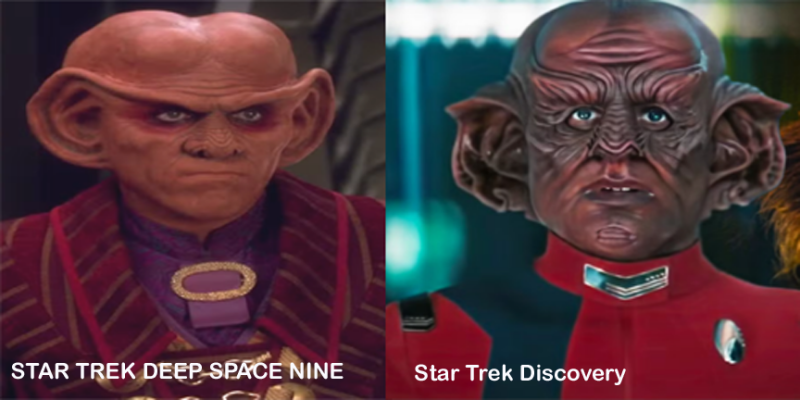
Star Trek is widely considered the mother of all fandoms. It is a show which has consistently broadcast on public television over the course of 50 years. Between the time period of Star Trek: The Original Series' debut in 1966 and Star Trek: Enterprise's finale in 2005, 725 episodes of Star Trek were released across six different series and were complimented by 10 feature films. Over 100 Star Trek tabletop and video games accompanied the various series. The number of written works - including technical manuals, maps, and spinoff novels - written during this period far surpasses the totality of the visual medium. There is no other fandom in existence which contains as much original and fan content as the Star Trek franchise. In addition, since 2009 there have been an additional three feature films and six new series, adding another 100+ episodes of content.
The greatest challenge for any Star Trek author or game community is to sift through the plethora of available content to determine what is and is not acceptable source material. In other words, what is canon versus non-canon. Fans of a show cannot be forced to simply accept content as canon if they find fault with it. Despite popular perception, fans have full authority to accept or reject an interpretation of their fandom which they feel does not properly represent the source material. Thus, the term 'canon' is subjective and not objective. To repeat: canon cannot be forced on a fan of the franchise. Only when it meets suitable subjective criteria can it then be accepted by those who have been engaging with the Star Trek universe since its inception.
ALPHA CANON
Alpha canon is a term used on USS Gallant to differentiate primary source material from secondary source material. Alpha canon, or primary source material, is defined as any Star Trek content directly created by its original studio or studio entities. In other words, the owners of the IP. In this case, that means any TV show or feature film created by Paramount, CBS, or any of its legacy entities is considered alpha canon.
Alpha canon feature films and TV series include:
- Star Trek: The Original Series (1966-69)
- Star Trek: The Animated Series (1973-74)
- Star Trek: The Next Generation (1987-94)
- Star Trek: Deep Space Nine (1993-98)
- Star Trek: Voyager (1995-2001)
- Star Trek: Enterprise (2001-05)
- Star Trek: The Motion Picture (1979)
- Star Trek II: The Wrath of Khan (1982)
- Star Trek III: The Search for Spock (1984)
- Star Trek IV: The Voyage Home (1986)
- Star Trek V: The Final Frontier (1989)
- Star Trek VI: The Undiscovered Country (1991)
- Star Trek: Generations (1994)
- Star Trek: First Contact (1996)
- Star Trek: Insurrection (1998)
- Star Trek: Nemesis (2002)
BETA CANON
Whereas alpha canon refers to primary source material created by the original IP owner (Paramount/CBS entities), beta canon refers to secondary source material which the IP holder licenses out to another entity to create. Because the IP holder is no longer directly involved in the design and production of secondary source material, it therefore becomes an interpretation of the primary source. In this case, when we refer to Paramount/CBS licensing out the Star Trek IP, we are specifying the Bad Robot Productions and Secret Hideout film and production companies. Any content created by either of these companies is an interpretation of Star Trek and is therefore designated as beta canon.
Beta canon feature films and web/TV series include:
- Star Trek: Discovery (2017-24)
- Star Trek: Short Treks (2018-20)
- Star Trek: Picard (2020-23)
- Star Trek: Lower Decks (2020-24)
- Star Trek: Prodigy (2021-23)
- Star Trek: Strange New Worlds (2022-pres)
- Star Trek (2009)
- Star Trek Into Darkness (2013)
- Star Trek Beyond (2016)
- Star Trek: Section 31 (2025)
GAME CANON
USS Gallant is mostly an alpha canon roleplay. We do try within the future ideas of the story arc to sometime incorporate some beta canon material (including other licensed books/comics/STO games) into our story arc world and writing. This includes past and future beta canon events, species, characters, ships and technology. We enjoy thinking of the various potential, alternative, or prospective outcomes of a situation, representing what could exist and happen that has not been explored or written yet.
* BECAUSE only so much can be explored over and over again that been written before it gets old and boring.
STAR TREK (2009) DESTRUCTION OF ROMULUS
While Gallant is an alpha canon RPG, our original parent organization forced our game to incorporate the 2009 Star Trek film's destruction of Romulus into our roleplay game world as 'official fleet lore'. Despite later becoming an independent group, retconning this beta canon content out of our story arc history is unfeasible. Therefore, the planets Romulus and Remus remain destroyed within our story arc world.